
The Hidden Variable in Professional Skincare
When a client in a professional skincare clinic is taking medication alongside cosmetic treatment, that medication may directly influence the way her skin behaves. The skin may become more sensitive, more vulnerable to sun exposure, slower to recover, more prone to irritation, dryness, hyperpigmentation or unexpected reactions. The professional skin therapist is not a physician, but she must understand how medications may change the skin’s response to active products, home care protocols and in clinic procedures. This knowledge helps reduce adverse reactions, prevent treatment mistakes and achieve safer, more precise results.
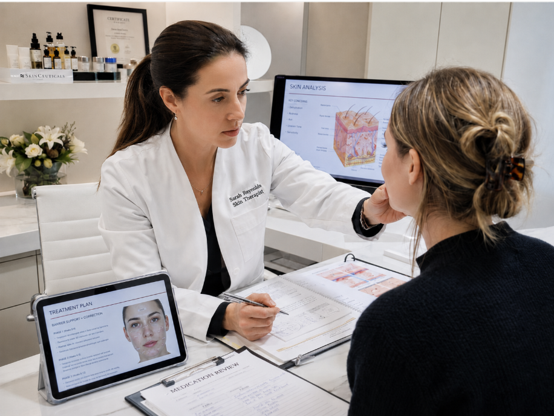
When the Right Treatment Becomes Too Much for the Skin
Medication may be the difference between a treatment that is accurate and safe, and one that places an inappropriate load on the skin. A client taking a photosensitizing medication, for example, may react excessively after a brightening treatment, a peel or the use of acids if the skin’s increased vulnerability to radiation has not been considered. Another client, whose skin has become dry and weakened by medication, may respond with stinging, irritation and barrier impairment even to a product that would usually be well tolerated.
This issue becomes especially important in professional skincare. We are not speaking about a consumer choosing a mild moisturizer from a shelf. Professional skin therapists often work with highly active products, meaningful concentrations and ingredients designed to change the skin’s behavior: retinoids, hydroxy acids, azelaic acid, melanin regulating ingredients, anti inflammatory agents and products for acne, hyperpigmentation, skin renewal and texture improvement. In the clinic, they may also perform procedures that create a controlled biological response, such as peels, renewal treatments, extractions, microneedling or device based procedures. When the skin is already being influenced by medication, a controlled load may become an excessive load.
The Intake Question That Changes the Treatment Plan
One of the most common points of uncertainty begins during the intake process. The client describes her skin, and the therapist asks, as she must, which medications she is currently taking. Sometimes it is an acne medication. Sometimes it is hormone therapy. Sometimes it is a medication for blood pressure, depression, an autoimmune disease or a condition that seems unrelated to the skin.
At that moment, many therapists feel they are entering a territory that is not theirs. Medication belongs to the physician, not to the skin therapist. That is true, but only partly. The therapist is not expected to diagnose disease, interpret medical treatment or change medication. However, she is treating skin that may be affected by that medication. Therefore, the professional question is not whether she understands every pharmacological mechanism of the drug, but whether she understands how the drug may influence the skin she is about to treat. This is not only a medical question. It is a therapeutic, aesthetic and professional question of the highest importance.
From Drug Name to Skin Behavior
When a client reports the use of medication, the therapist cannot be satisfied with simply writing the drug’s name on the intake form. She must understand what that medication may do to the skin. Medications may affect the skin in many ways, but from the therapist’s perspective, the most important effects are those that change treatment safety, treatment intensity and the selection of home care products. Only when the possible implications are understood can this information be translated into a correct treatment decision: should the intensity be reduced, should a procedure be postponed, should the barrier be strengthened first, should certain ingredients be avoided temporarily, or should the client be referred for medical consultation before treatment continues?
A Clinical Map, Not a Drug Bible
The following table is not intended to serve as a “drug bible” for the professional skin therapist. It is not a closed database into which one enters the name of a medication and receives an absolute answer. The world of medication is too broad, too dynamic and too dependent on dosage, duration of use, the client’s health status, the condition of the skin and the planned procedure. The purpose of the table is different: to offer a conceptual map. It shows which types of skin effects medications may cause, which medication groups repeatedly appear in these contexts, and how this information should guide clinical thinking. It does not replace a specific review of each medication on its own merits.
Photosensitivity
Selected antibiotics, especially tetracyclines such as doxycycline, fluoroquinolones and sulfonamides; NSAIDs; thiazide diuretics such as hydrochlorothiazide; amiodarone; phenothiazines; voriconazole; azathioprine.
Phototoxic or photoallergic reaction after interaction between the drug or its metabolites and UVA, UVB or visible light.
Use caution with peels, acids, retinoids, brightening protocols and renewal procedures. Strengthen photoprotection, reduce intensity and consider postponing active treatment during high sun exposure or when the skin is already irritated.
Hyperpigmentation or Worsening of Existing Pigmentation
Minocycline; chloroquine and hydroxychloroquine; amiodarone and selected cardiovascular drugs such as diltiazem; selected chemotherapeutic agents; clofazimine; zidovudine; phenothiazines; tricyclic antidepressants; selected NSAIDs; estrogen containing hormonal therapy, especially in melasma prone clients.
Increased melanin synthesis, deposition of the drug or its metabolites, deposition of other pigments, or post inflammatory hyperpigmentation after irritation or photosensitivity.
In pigmentation prone clients, avoid unnecessary inflammation, aggressive peeling, heat and irritation. Emphasize photoprotection, gradual treatment and reduced treatment load when the skin is reactive.
Dryness, Reduced Tolerance and Barrier Impairment
Oral isotretinoin; systemic retinoids such as acitretin; topical retinoids; benzoyl peroxide and therapeutic acids; selected oncology treatments, especially EGFR inhibitors. In a weaker, context dependent way: certain antihistamines, diuretics, statins and anticholinergic medications.
Reduced sebum secretion, xerosis, cheilitis, peeling, fissures, increased TEWL in some cases, reduced tolerance and secondary inflammation.
Reduce or pause irritating products, acids and retinoids. Introduce actives gradually. Avoid combining several irritants. Prioritize moisturization, barrier repair and calming before active treatment.
Hypersensitivity, Irritation, Erythema and Inflammatory Reactions
Selected antibiotics, especially beta lactams and sulfonamides; NSAIDs; anticonvulsants such as carbamazepine and phenytoin; allopurinol; biologic drugs; oncology treatments; topical retinoids, benzoyl peroxide, hydroxy acids and azelaic acid.
Immune hypersensitivity, inflammatory response, direct irritation, contact dermatitis or secondary barrier damage.
Do not treat red, irritated or eruptive skin as merely “sensitive skin.” Pause irritating products and procedures, support barrier repair, check timing in relation to medication use and refer to a physician if the eruption is new, widespread, painful, itchy or worsening.
Delayed Recovery After Procedures
Chronic systemic corticosteroids; immunosuppressive therapies such as cyclosporine, tacrolimus, methotrexate and azathioprine; chemotherapy; anti VEGF therapies and selected tyrosine kinase inhibitors.
Impaired inflammatory response, fibroblast activity, angiogenesis, matrix production, collagen synthesis and tissue strength; sometimes combined with increased infection risk.
Use caution with peels, microneedling, aggressive extractions and procedures that require tissue repair. Consider postponement, reduced depth, longer recovery time or medical clearance, especially in weakened skin or oncology/immunosuppressed clients.
Immunosuppression or Increased Infection Risk
Systemic corticosteroids; immunosuppressive drugs such as cyclosporine, tacrolimus, methotrexate, azathioprine and mycophenolate mofetil; biologic therapies such as TNF inhibitors; chemotherapy and selected hematologic or oncology treatments.
Reduced local or systemic immune response, suppression of normal inflammation and reduced ability to deal with pathogens, often combined with barrier damage or delayed healing.
Use caution with procedures that disrupt the barrier. Prefer gentle, non invasive treatment, maintain strict hygiene, avoid treatment over open wounds or active infection and request medical guidance when needed.
Acneiform Eruption or Worsening of Acne
Systemic, topical or inhaled corticosteroids; anabolic steroids, testosterone and androgenic drugs; lithium; EGFR inhibitors and selected targeted oncology therapies; selected anticonvulsants and immunomodulating drugs.
Inflammation of the pilosebaceous unit, androgenic effect, altered sebaceous activity, disruption of EGFR pathways or folliculitis like inflammation.
Do not rush into a classic drying acne protocol. Check whether lesions appeared after a new medication or dose change, whether they are monomorphic, whether comedones are absent and whether distribution is atypical. Avoid over drying and refer atypical or rapid cases.
Skin Thinning, Atrophy and Fragility
Mainly topical corticosteroids, especially prolonged, high potency use on thin skin areas or under occlusion; chronic systemic corticosteroids in some cases.
Suppressed fibroblast activity, reduced collagen and extracellular matrix synthesis, weaker dermal and epidermal structure, telangiectasia, striae, purpura and fragility.
Treat the skin as less resistant. Avoid aggressive peeling, strong massage, traumatic extractions, suction, microneedling or controlled injury without careful assessment. Focus on barrier repair, hydration and calming.
Increased Bruising, Purpura or Bleeding
Anticoagulants such as warfarin, apixaban, rivaroxaban, dabigatran and heparins; antiplatelet drugs such as aspirin and clopidogrel; selected NSAIDs; chronic corticosteroid use when atrophy is present.
Effects on coagulation, platelet activity, clot formation or vascular and skin fragility.
Never advise the client to stop anticoagulant or antiplatelet medication. Avoid traumatic actions such as aggressive extractions, strong suction, deep massage or microneedling when risk is significant. Refer before substantial procedures or unusual bleeding risk.
Suspicious Skin Reactions Requiring Medical Referral
Almost any medication may rarely cause a significant skin reaction. Recognized examples include sulfonamides, beta lactam antibiotics, anticonvulsants such as carbamazepine, phenytoin and lamotrigine, allopurinol, NSAIDs, oncology drugs and biologics.
Drug hypersensitivity or immune reaction, sometimes systemic. Rarely, severe cutaneous adverse reactions such as SJS/TEN, DRESS or AGEP.
This is not a situation for cosmetic adjustment. New widespread rash, rapidly worsening rash, blisters, skin pain, peeling, fever, facial swelling, mucosal involvement, significant urticaria or shortness of breath require stopping cosmetic treatment and referring to a physician.
How to Read the Table Professionally
Several clarifications are essential. This table is not exhaustive. The level of evidence and clinical relevance differs between drugs, and even between drugs within the same family. The risk depends on dose, duration, combinations of medications, skin condition, age, photodamage, underlying disease, sun exposure and the type and depth of the cosmetic procedure. The therapist does not change medication, does not recommend stopping medication and does not diagnose drug reactions. Her responsibility is to understand the possible skin implications, adjust the cosmetic load and recognize when referral is needed.
It is also important to distinguish between ordinary cosmetic dryness or sensitivity and a medication related change in the skin’s tolerance. In some cases, the skin is not merely “dry” or “sensitive.” It may be under pharmacological influence, with reduced barrier capacity, altered inflammatory response, slower recovery or a higher tendency to pigment, bruise or react. In such cases, a standard active protocol may need to become slower, gentler and more protective.
The Knowledge Gap Skin Therapists Want to Close
As a biologist, skin researcher and educator of thousands of professional skin therapists in Israel and around the world, I encounter this thirst for knowledge again and again. Not only regarding medications, but regarding every factor that may change the skin’s response to cosmetic treatment: technologies, procedures, medical conditions, sun exposure, topical treatments, systemic treatments and home care habits.
The professional skin therapist wants to understand. She wants to know when the skin is ready for active treatment, when it requires a slower approach, when it needs repair and when it is correct to stop and refer to a physician. This knowledge may appear distant or inaccessible at first glance, but it is far more accessible than it seems. It becomes available when she knows how to ask the right questions: What may this medication do to the skin? Does it affect sensitivity, sun response, barrier function, pigmentation, healing, inflammation or infection risk? Does the treatment I am planning add the right kind of controlled load, or a load that may be too great for the skin’s current condition?
Reliable Sources, Better Questions and the Role of AI
These questions can and should be directed to reliable professional sources: to the training teams of the brands with which the therapist works, when those companies are truly committed to high level professional support; to qualified medical and dermatological sources; and today, also to artificial intelligence tools, which can be highly useful in gathering information, understanding mechanisms and guiding clinical thinking, as long as they are used critically and responsibly.
Beyond Products: What a Professional Brand Must Provide
Today, a professional skincare brand can no longer be merely a product line. It must function as a complete support system: knowledge, education, protocols, clinical judgment, the ability to answer complex questions and a deep understanding of the way skin responds to treatment. In an era in which the skin therapist works with active products, meaningful concentrations, procedures and technologies, this kind of support is not a pleasant extra. It is an essential condition for safety, precision, better results and a higher level of professional confidence.