
Integrating Aesthetic Technologies and Professional Skincare: A Clinical Framework for Better Outcomes
The Missing Link in Professional Skin Treatment
Modern aesthetic practice combines two powerful therapeutic tools: technology based treatments and professional skincare. Technologies can generate tissue remodeling, reduce pigmentation, improve skin tightening, decrease inflammation, or stimulate various biological responses. Professional skincare products can influence epidermal renewal, melanogenesis, inflammation, collagen synthesis, barrier repair, hydration, and other physiological processes.
While most practitioners receive training in the use of technologies and in the use of skincare products, much less attention is given to the interaction between them. Questions such as when to discontinue active ingredients before treatment, how to adjust home care during a treatment series, whether a professional peel should be combined with a particular technology, or how recovery should be managed after treatment often remain unanswered.
The purpose of this article is to present a practical framework for integrating technologies and professional skincare into a single treatment strategy. The discussion focuses on biological principles rather than specific brands or devices, allowing the same concepts to be applied across a wide range of technologies and clinical situations.
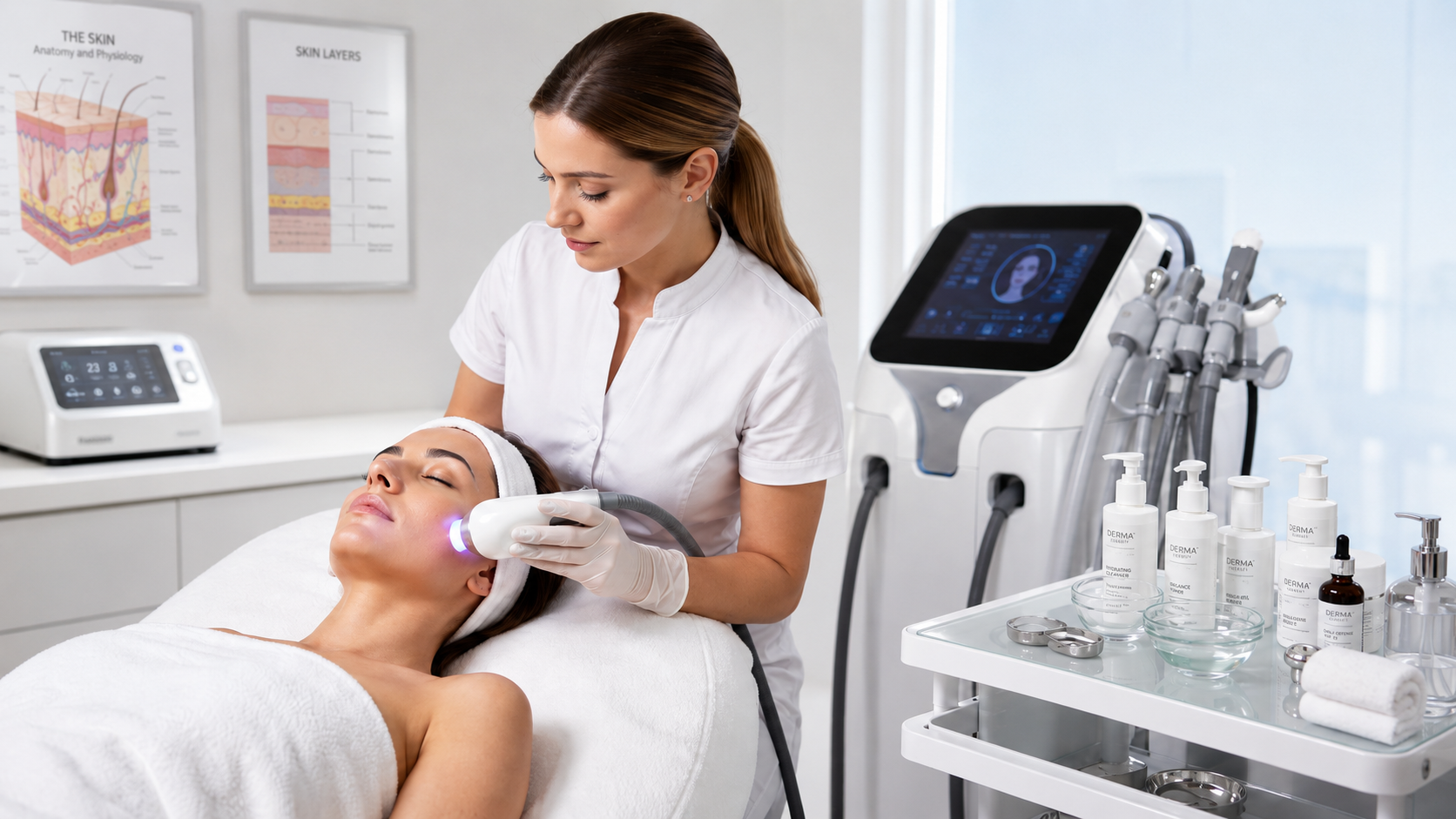
Why Combine Technologies and Professional Skincare?
Better Outcomes
One of the most important reasons for integrating professional skincare with aesthetic technologies is the ability to improve treatment outcomes.
Many technologies are designed to interact with specific structures within the skin. When excessive surface buildup is present, part of the treatment energy may be absorbed, scattered, or expended on tissue that could have been removed beforehand. Appropriate skin preparation can therefore improve the efficiency of the technology itself. By reducing unnecessary surface accumulation and improving epidermal turnover before treatment begins, the practitioner creates conditions that allow the technology to interact more effectively with its intended target.
This concept extends beyond exfoliation. Preparing the skin before a treatment series often improves hydration, barrier function, and overall tissue quality, creating a biological environment that responds more favorably to therapeutic intervention.
Technologies and skincare products also influence different biological pathways. A tightening technology may improve tissue remodeling and firmness while having little effect on epidermal renewal or pigmentation. A pigment targeting technology may reduce visible pigmentation without significantly affecting skin texture. Professional skincare products can address many of these additional parameters, including epidermal turnover, pigmentation control, inflammation, hydration, and barrier function.
The result is a broader therapeutic effect than either approach can typically achieve alone.
This is particularly relevant in complex conditions such as photoaging. Skin aging involves multiple biological changes occurring simultaneously, including reduced epidermal turnover, alterations in collagen and elastin, barrier dysfunction, pigmentation irregularities, dehydration, and chronic low grade inflammation. Combining technologies and skincare products allows several of these mechanisms to be addressed within the same treatment strategy.
Recovery, Safety, and Predictability
The final outcome of a treatment depends not only on the procedure itself but also on how the skin responds to the biological stress created by that procedure.
Preparation therefore begins before treatment. Skin characterized by dehydration, irritation, inflammation, or impaired barrier function often responds less predictably to therapeutic stress and may require longer recovery. Appropriate preparation can improve skin resilience before treatment and support a more controlled recovery afterward.
For technologies that generate significant heat, tissue injury, or remodeling, preparation and recovery become particularly important. Calming ingredients, antioxidants, barrier supporting products, and in some cases melanin suppressing ingredients can help create conditions that support efficient recovery and reduce the risk of complications.
Preparation also serves as a valuable assessment period. The skin’s response to active ingredients provides information about its biological behavior. Practitioners can observe how well the skin tolerates stimulation, how quickly it recovers, and whether there is a tendency toward excessive irritation, inflammation, or pigmentation. These observations help guide decisions regarding treatment intensity, treatment intervals, and recovery protocols.
For patients prone to post inflammatory hyperpigmentation, pigmentation control becomes an integral part of treatment safety. In these individuals, melanin suppressing ingredients are often incorporated before and after treatment to reduce the likelihood of unwanted pigmentary responses during recovery.
The Role of Different Ingredient Families
Different categories of ingredients contribute to treatment integration in different ways.
Exfoliating agents such as hydroxy acids and retinoids are often used to improve epidermal renewal and prepare the skin before treatment. Melanin suppressing ingredients help control pigmentation and reduce the risk of treatment induced hyperpigmentation. Antioxidants and anti inflammatory ingredients assist in controlling inflammatory responses and limiting oxidative stress. Barrier supporting ingredients help restore epidermal function during recovery.
Vitamin C deserves particular attention in procedures designed to stimulate collagen production. Beyond its antioxidant activity, vitamin C participates directly in collagen synthesis and may support the production of new collagen following collagen stimulating procedures.
A Clinical Framework for Integration
Effective integration begins with understanding the biological effect created by the technology.
Before selecting products or designing protocols, practitioners should evaluate how the technology interacts with the skin. Does it generate heat? Does it induce inflammation? Does it disrupt the epidermal barrier? Does it stimulate remodeling? Does it require a recovery period?
The answers to these questions determine skin preparation, product selection, treatment sequencing, recovery protocols, and treatment frequency.
Technologies that create substantial tissue injury, significant inflammation, or prolonged recovery require a different integration strategy than technologies associated with minimal barrier disruption and limited recovery demands.
The same principle applies when considering additional interventions such as professional peels. Their role should be determined by the biological effect of the technology and by the cumulative stress imposed on the skin.
A peel may substantially improve outcomes when combined with technologies that provide limited epidermal renewal. However, when a technology already creates significant tissue injury, the addition of a peel may increase inflammation and prolong recovery without providing meaningful additional benefit.
For this reason, treatment planning should consider not only the effect of each individual intervention but also the total biological burden created by the treatment strategy as a whole.
Treatment Sequencing
When several technologies and products are combined within the same treatment session, the sequence of application becomes clinically important because each step changes the biological state of the skin and influences the response to subsequent interventions.
A common example is the combination of a professional peel with technologies that generate heat or increase ingredient penetration.
In these situations, the technology is generally performed before the peel. Following a peel, the skin exhibits increased permeability, activation of inflammatory pathways, and varying degrees of barrier disruption. Additional heating or enhanced penetration at this stage may unnecessarily increase tissue stress and irritation.
Performing the technology before the peel allows each intervention to contribute its intended effect while maintaining better control over inflammation and recovery.
The same principle applies after invasive procedures. Once a treatment has generated significant tissue injury or remodeling, the biological priorities shift toward recovery. Product selection at this stage therefore focuses on barrier support, hydration, inflammation control, antioxidant protection, and efficient tissue repair.
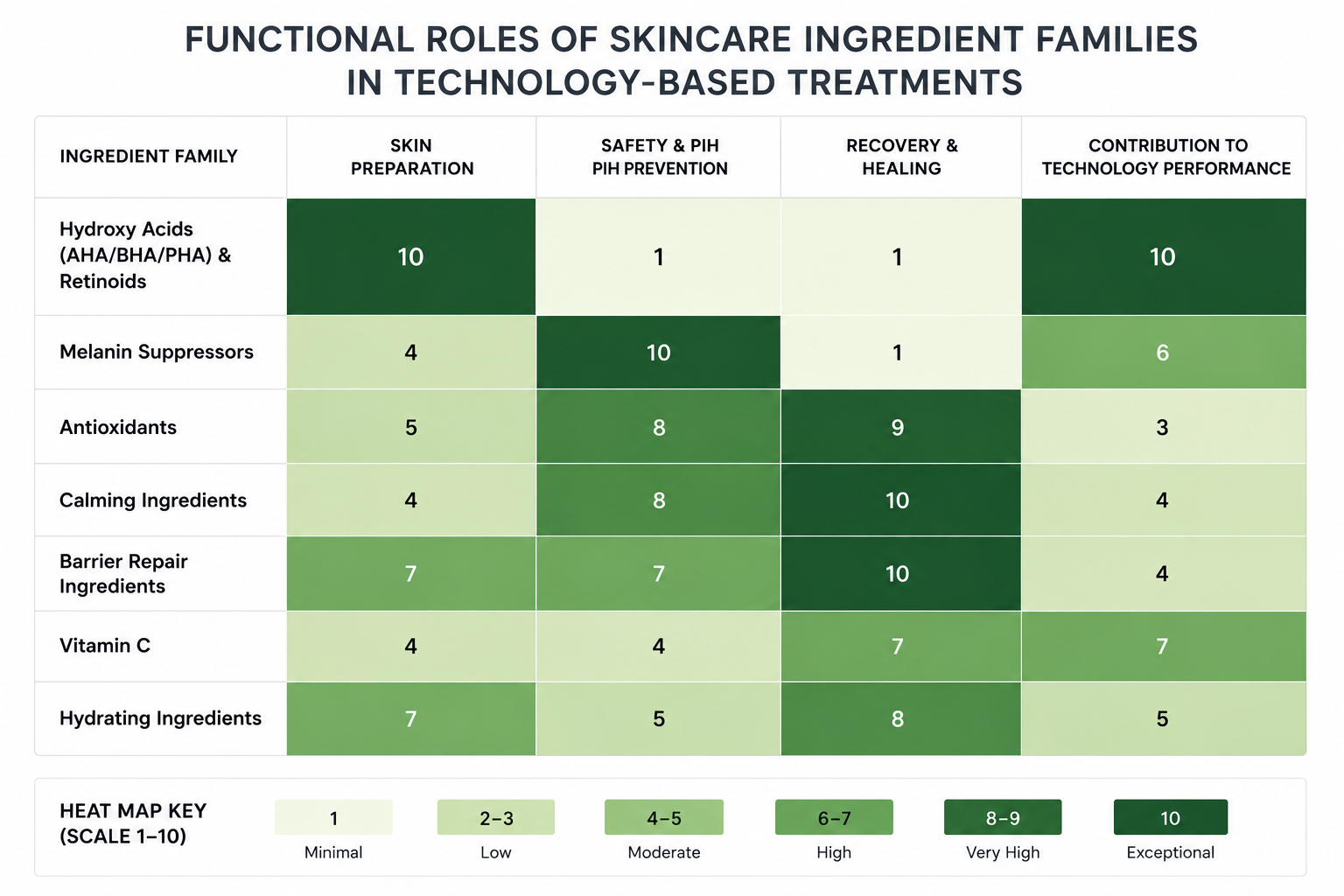
Integration According to Technology Type:
Ablative and Remodeling Technologies
Technologies designed to create controlled tissue injury and stimulate remodeling, such as microneedling, fractional lasers, and fractional radiofrequency, require the most comprehensive integration strategy because treatment success depends not only on the procedure itself but also on the quality of healing that follows.
Skin preparation typically begins before the procedure. Exfoliating agents such as hydroxy acids and retinoids are often used to improve epidermal renewal and overall skin quality prior to treatment. Because these ingredients may increase cumulative irritation when combined with an invasive procedure, they are commonly discontinued approximately one week before treatment and resumed only after the skin has recovered sufficiently.
Patients with a tendency toward post inflammatory hyperpigmentation require additional attention. In these individuals, melanin suppressing ingredients are frequently incorporated before and after treatment to reduce the risk of pigmentation developing during the healing process.
Following the procedure, the focus shifts toward recovery. Barrier supporting ingredients, calming formulations, moisturizers, and antioxidants help support tissue repair and control excessive inflammation. Antioxidants are particularly relevant because tissue remodeling is accompanied by increased oxidative activity.
Vitamin C deserves special consideration in collagen stimulating procedures. In addition to its antioxidant properties, it plays a direct role in collagen synthesis. When a treatment is designed to stimulate the production of new collagen, maintaining adequate vitamin C availability may support that biological process.
Pigment Targeting Technologies
Technologies designed to target pigmentation, particularly IPL based treatments, require a somewhat different integration strategy because their primary objective is pigment reduction rather than collagen remodeling.
When treatment produces visible crusting or a significant healing response, the skin should be managed in a manner similar to other procedures that require recovery. Exfoliating agents are typically discontinued before treatment and resumed only after the treated areas have healed adequately.
Melanin suppressing ingredients play a central role in this category. They are often used before treatment to reduce melanocyte activity and continued afterward to minimize the risk of rebound pigmentation during recovery. Their purpose is not to replace the effect of the technology but to support and stabilize the pigmentary improvement achieved by the procedure.
Calming ingredients, antioxidants, and barrier supporting formulations may also contribute to a more controlled healing process and reduce treatment related inflammation.
Non Ablative Tightening Technologies
Non ablative tightening technologies such as HIFU and non fractional radiofrequency create a different clinical situation because they stimulate tissue remodeling without producing meaningful epidermal injury.
As a result, exfoliating agents and retinoids can often be used throughout much of the treatment series. These ingredients provide improvements in epidermal renewal, texture, radiance, and pigmentation that the technology itself does not directly address. The result is a broader overall improvement than either approach would typically produce alone.
This distinction is clinically important. In ablative procedures, topical products often serve primarily to prepare the skin, reduce complications, and support recovery. In non ablative tightening procedures, topical products frequently contribute additional treatment outcomes that complement the biological effects of the technology.
Recovery protocols are generally less demanding because the epidermal barrier remains largely intact. Barrier supporting and calming products may still be used, but they usually play a secondary role compared with their importance after invasive procedures.
Melanin suppressing ingredients are not routinely required in every patient. However, they may be beneficial in individuals with darker phototypes or in patients known to develop pigmentation easily following heat based stimulation.
Conclusion
Technologies and professional skincare products should not be viewed as separate therapeutic tools operating in parallel. When integrated correctly, they become components of a single biological treatment strategy.
The principles governing this integration are remarkably consistent across technologies. Skin preparation improves the tissue environment in which the technology operates. Active ingredients can reduce inflammation, support recovery, control pigmentation, improve epidermal renewal, and enhance biological responses that contribute to the final outcome. Treatment sequencing influences both safety and efficacy. Recovery protocols help determine the quality of healing that follows the procedure.
The specific device being used is therefore only one part of the decision making process. Equally important is understanding how the skin will respond before, during, and after treatment, and selecting products that support those biological events at each stage.
Practitioners who approach technology and skincare as an integrated system gain greater control over outcomes, recovery, safety, and long term treatment success. Ultimately, the most effective treatment plans are not built around devices or products alone, but around the biological needs of the skin throughout the entire therapeutic journey