
Enlarged Pores: What Causes Them and How Can They Be Treated?
Enlarged pores are one of the most common aesthetic concerns.
They appear in women and men, in younger and older skin, in oily skin and also in dry skin.
Enlarged pores are not a pathology and not a “skin problem” in the medical sense.
They are the visible result of different physiological processes taking place in the skin.
In order to treat them correctly, we first need to understand how they form.
How Do Enlarged Pores Develop?
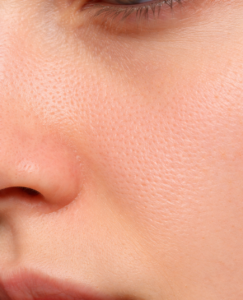
Pores are the openings of hair follicles and sebaceous glands.
They are a natural and essential part of skin structure.
You may have noticed that babies do not have enlarged pores. Why?
Because enlarged pores are not present at birth. They develop over time.
During puberty, sebaceous gland activity increases significantly under the influence of androgens. Increased sebum production creates constant pressure on the follicular wall, gradually widening the pore opening. Later in life, additional factors come into play: a slower cell turnover rate, cumulative sun exposure, and a gradual decline in collagen and elastin around the follicle opening.
Are enlarged pores only related to oily skin? Not necessarily.
They are the result of an interaction between sebum activity, follicular structure, dermal support, cell renewal rate, and genetic predisposition.
Genetics, Environment, and Skincare – Who Really Determines Pore Size?
Enlarged pores appear in both men and women.
Is there a difference? Yes. On average, pores tend to be more visible in men due to higher sebaceous activity.
Genetics play a key role. They influence follicle size, sebaceous gland density, and the skin’s response to environmental stressors. However, genetics are not destiny. Environmental exposure and skincare habits largely determine how pores appear over time.
Chronic sun exposure, air pollution, smoking, and oxidative stress damage the collagen and elastin that support the follicular opening. Poor or aggressive skincare can further worsen pore appearance.
What about dirt, pollution, and dead cell buildup?
Do they actually enlarge pores? Not anatomically.
However, they significantly worsen their appearance.
The accumulation of dead skin cells, oxidized sebum, makeup residues, and environmental pollutants around the pore opening increases contrast and shadowing, making pores appear larger. It also promotes subclinical inflammation that weakens the surrounding tissue over time. This is why proper cleansing and controlled exfoliation are essential foundations, not optional steps.
Enlarged Pores in Mature Skin – Why Do They Appear Even in Non-Oily Skin?
Many people are surprised to notice enlarged pores in their 40s and 50s, even when their skin is no longer oily. Why does this happen?
With age, the dominant mechanism shifts.
Less sebum, more structural change.
Collagen and elastin around the follicular opening gradually decline. Dermal support weakens. The pore does not necessarily “open,” but it appears larger because the tissue that once supported it has lost firmness.
In addition, slower cell renewal and overall changes in skin texture make pores more visible.
The practical implication is clear: in mature skin, sebum control alone is not enough. Treatment must address dermal quality and structural support.
Which Active Ingredients Actually Improve the Appearance of Pores?
Expectation management is essential.
There is no ingredient that truly “closes” pores.
However, several ingredients can significantly improve their appearance.
Retinoids are among the most evidence-based options. Retinol at concentrations around 0.2%, or prescription retinoids, work by normalizing keratinization and improving dermal quality over time. Results are gradual and typically noticeable after 8–12 weeks or more.
Niacinamide at 2% has been shown to reduce sebum production within a few weeks. Does it change pore size? Probably not. But in oily skin, it often reduces pore visibility substantially. At 5%, niacinamide also improves skin texture and barrier function.
Alpha hydroxy acids such as glycolic and lactic acid do not alter follicular structure, but they improve the surrounding environment. Glycolic acid effectively removes dead cells around the pore opening but must be used carefully to avoid barrier damage. Lactic acid is gentler and often better suited for mature or sensitive skin. Both improve skin uniformity, which reduces the visual prominence of pores.
What About Device-Based Treatments?
Before choosing a technology, one key question must be asked:
Why does the pore appear enlarged?
In younger skin, where dermal support is strong, pore visibility is usually related to sebum, keratin buildup, and surface texture. In these cases, topical treatments often deliver better results than devices.
In mature skin, where structural support is compromised, technologies such as microneedling or fractional radiofrequency become more relevant. These treatments do not act on the pore opening itself, but rather on the tissue that supports it. Clinical studies show meaningful improvements in pore visibility, volume, or count after treatment series.
However, aggressive treatments can backfire. Precision and proper patient selection are essential.
How Much Can Pores Actually Improve?
This question comes up frequently.
The honest answer is that there is no single number.
Most studies do not measure the diameter of individual pores. Instead, they assess changes in pore count, volume, or overall visibility. Improvements of approximately 30–50% have been reported in these parameters following certain technological treatments. These changes are significant, but not absolute.
The Bottom Line
Enlarged pores are not one condition with one solution.
Sometimes they appear large because of what accumulates inside them.
Sometimes because of what is missing around them.
Cleansing, exfoliation, active ingredients, and advanced technologies are not competing approaches. They complement each other.
When the underlying cause is correctly identified, treatment can lead to real, lasting improvement rather than temporary cosmetic effects. This is not about eliminating pores. It is about working intelligently with skin physiology.